
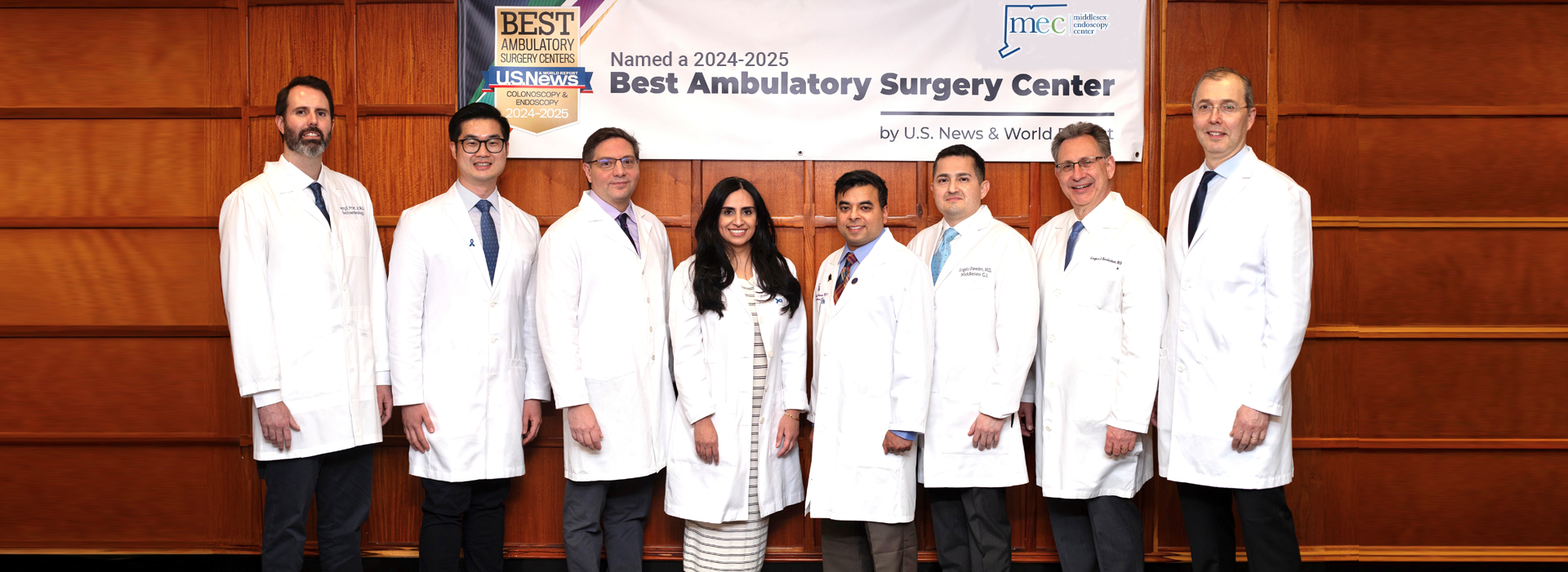
Middlesex Endoscopy Center – Providing world-class care in a private, local, and independent practice.









The physicians and staff at Middlesex Endoscopy Center welcome you to our facility.
faq
Frequently Asked Questions
Middlesex Endoscopy Center is a state-of-the-art outpatient center that was designed, equipped, and staffed to provide the highest quality care.
What is a colonoscopy?
A colonoscopy allows your doctor to look inside the entire large intestine. The procedure enables your physician to see things such as inflamed tissue, abnormal growths, and ulcers. It is most often used to look for early signs of cancer in the colon and rectum. It is also used to look for causes of unexplained changes in bowel habits and to evaluate symptoms like abdominal pain, rectal bleeding, and weight loss.
When should I start screenings?
If you have no colorectal symptoms, family history of colon cancer, polyps or inflammatory bowel disease you should have your first exam at age 50 whether you are a man or a woman since colon cancer affects both EQUALLY! Recent evidence suggests that African Americans should begin screening earlier at the age of 45.
Has colonoscopy been shown to be effective in preventing colon cancer and saving lives?
Yes. Colonoscopy accomplishes this by detecting and removing polyps, and detecting early cancers. Recent data show that both the number of new cases of colon cancer (incidence) and deaths from the disease are decreased when colonoscopy is performed according to established guidelines.
What is an upper endoscopy?
Upper endoscopy enables the physician to look inside the esophagus, stomach, and duodenum (first part of the small intestine). The procedure might be used to discover the reason for swallowing difficulties, nausea, vomiting, reflux, bleeding, indigestion, abdominal pain, or chest pain. Upper endoscopy is also called EGD, which stands for esophagogastroduodenoscopy.
What is my risk of developing colon cancer if I live in the United States??
Your lifetime risk (defined as life to 85 years old) is approximately 6% (male or female). Your risk is roughly doubled if one (1) first degree relative (parent, sibling or child) had colon cancer or polyps after age 50, and is higher if the cancer or polyps were diagnosed at a younger age or if more members of your family are affected. Certain inherited disorders, for example, polyposis syndromes and hereditary non-polyposis colorectal cancer, can increase your risk of developing colon cancer, but those are rare. Other important risk factors include obesity, cigarette smoking, inflammatory conditions in the colon such as Crohn’s, colitis and ulcerative colitis, and excessive alcohol consumption. Your doctor is in the best position to discuss whether your personal or family history suggests one of those conditions.
Is colonoscopy painful?
No, colonoscopy is usually not painful! Almost all colonoscopies can be performed using “intravenous sedation” or “twilight sedation” in which you are very drowsy, but comfortable and still breathing on your own. The most common type of sedation also has a mild amnesiac effect, so most patients do not even remember the procedure! Your doctor can discuss with you the best form of sedation to suit your needs.
What we do
In the Community
At the heart of our center lies a deep commitment to serving not only our patients within our walls, but the broader community we are privileged to call home. We believe that access to quality healthcare resources, education, and support should extend far beyond the clinical encounter.

Tour De Tush
Spokes Spin-off
Middlesex Endoscopy staff visit Great Day@#9a with Caitlin Francis and Scot Haney to discuss Tour De Tush Spokes Spin-Off.
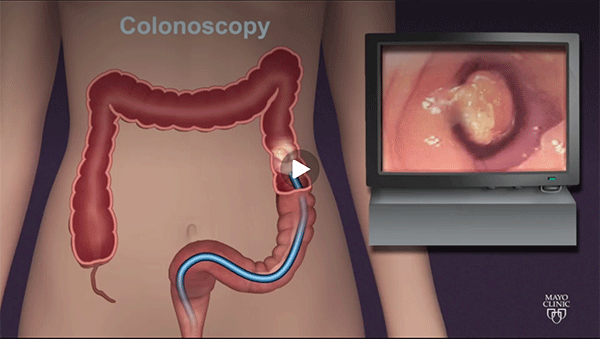
Mayo Clinic Minute
The importance of a colonoscopy. How colonoscopies save lives.

Mayo Symptom Checker
Mayo Clinic’s online Symptom Checker. The purpose of this tool is to help you narrow your search along your information journey; this is not a diagnostic tool.
For 2-years in row, U.S. News & World Report awards Middlesex Endoscopy Center “Best Ambulatory Surgery Center”*
* The data and methodology behind the U.S. News & World Report Best Ambulatory Surgery Center (ASC) ratings, which are displayed on usnews.com.